
ZSOUND Guide: What is a Professional Line Array System?
Imagine walking into a massive stadium concert or a high-end music festival. You look toward the stage and see long, curved columns of speakers hanging high in the air. This iconic “Wall of Sound” is a Professional Line Array System (a specialized arrangement of identical loudspeaker modules mounted in a line to create a near-line source of sound). Unlike traditional point-source speakers that spray sound in every direction like a floodlight, a line array functions more like a laser, focusing the audio energy exactly where the audience is sitting.
At ZSOUND, we understand that for a beginner, the world of pro audio can feel like a maze of wires and decibels. However, choosing the right Professional Line Array Speaker (the individual boxes that make up the entire hanging system) is the foundation of any successful event. Whether you are looking at the compact LC8 for a conference room or the heavy-duty LA212 for a touring performance, the goal remains the same: delivering clear, consistent sound to every single listener, from the front row to the very back.
The Science of the “Cylindrical Wave”: How It Works
The magic behind a Professional Line Array System lies in how it handles sound waves. When multiple speakers are stacked vertically and spaced closely together, they produce what engineers call a “cylindrical wave” (a shape of sound travel that loses energy much slower than standard spherical waves).
In simple terms, think of a garden hose. If you remove the nozzle, the water spills out and loses pressure immediately. But if you put your thumb over the end to create a narrow, high-pressure stream, the water travels much further. A line array does the same with sound. By using specialized components like Neodymium drivers (magnets that are incredibly strong yet significantly lighter than traditional ferrite magnets), we can build systems like the LA110 that provide maximum headroom (the “safety margin” of volume before the sound starts to distort or crackle) without the massive weight.
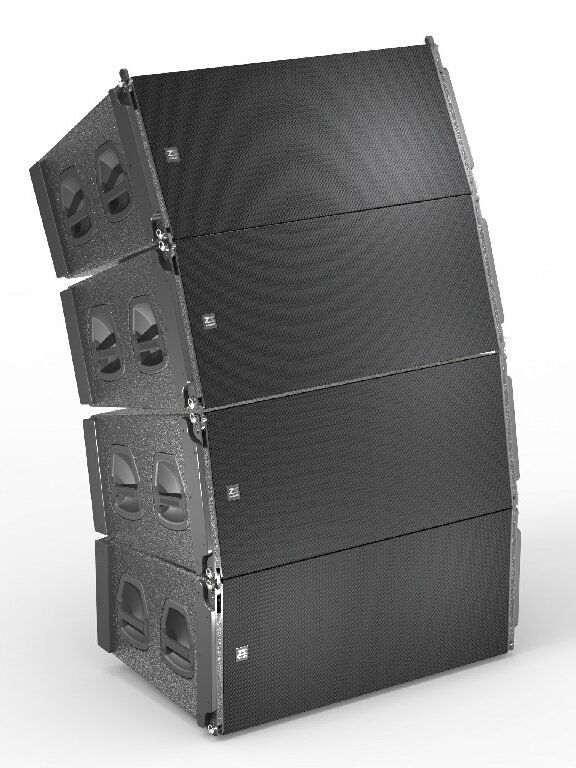
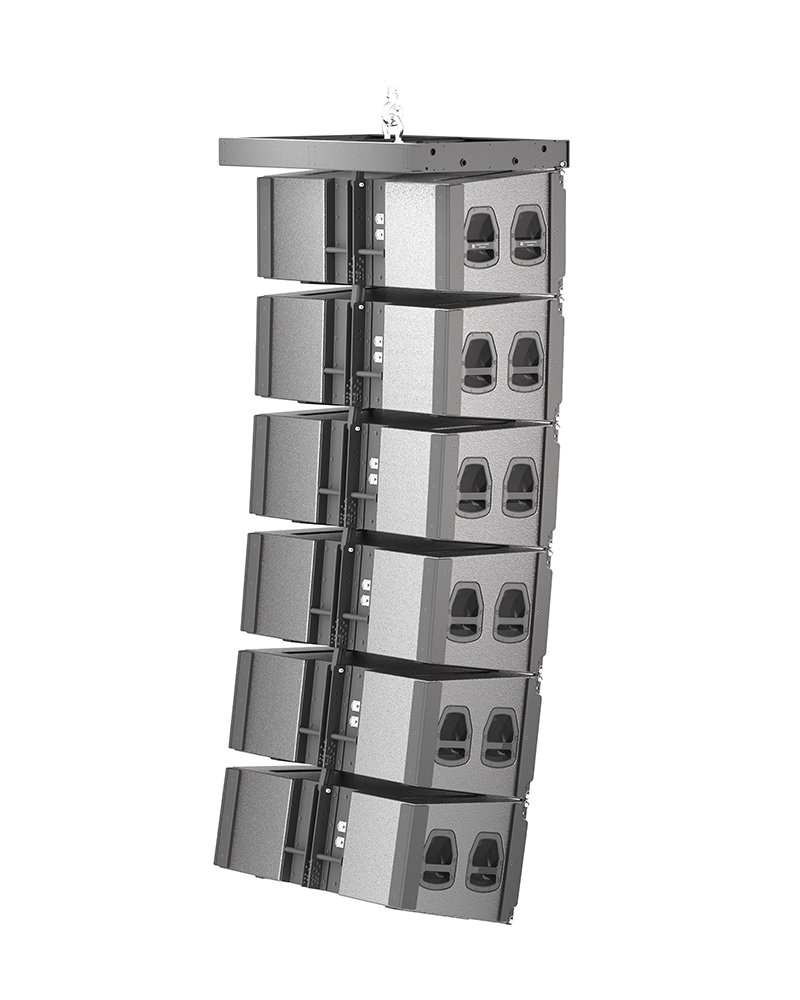
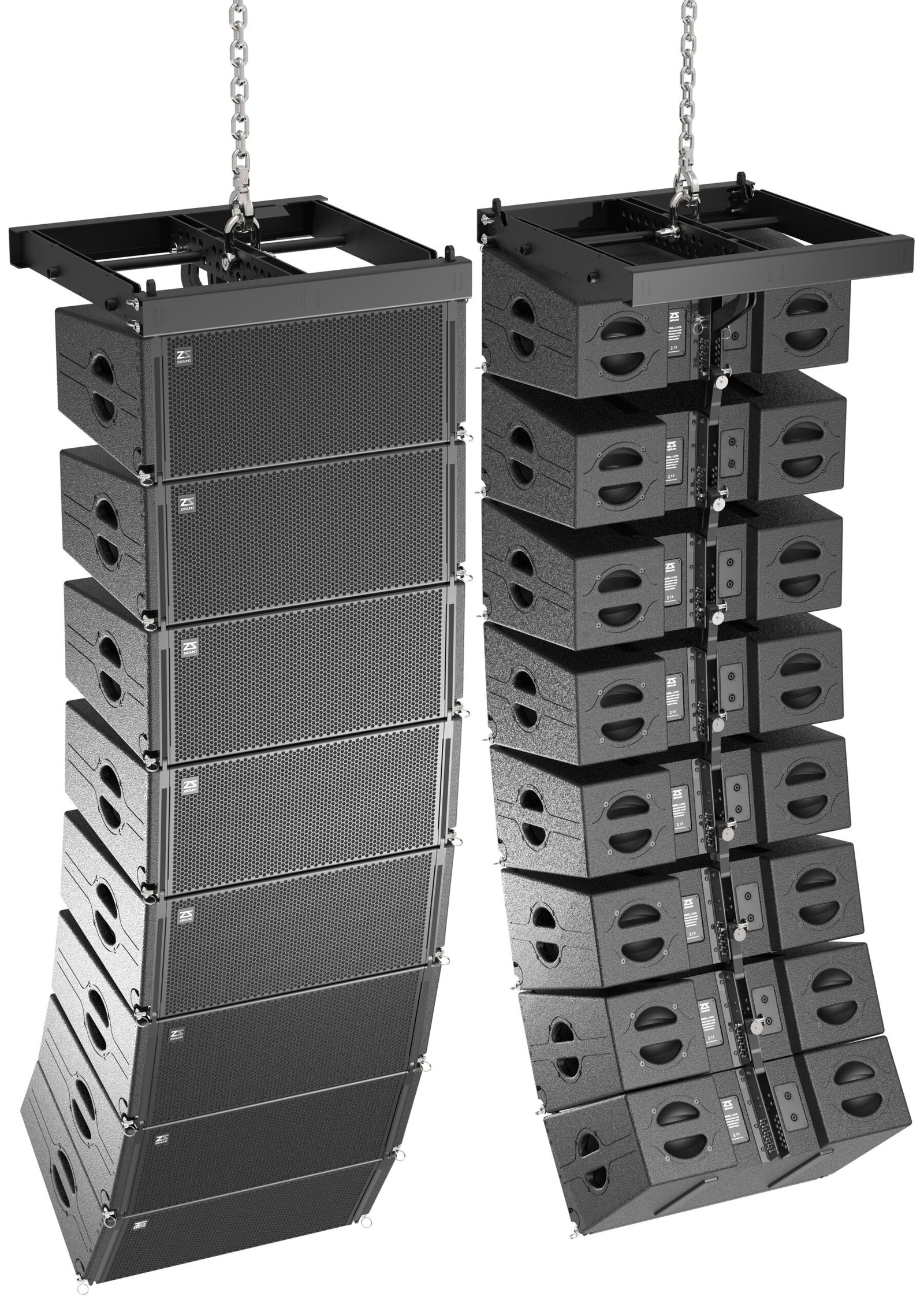
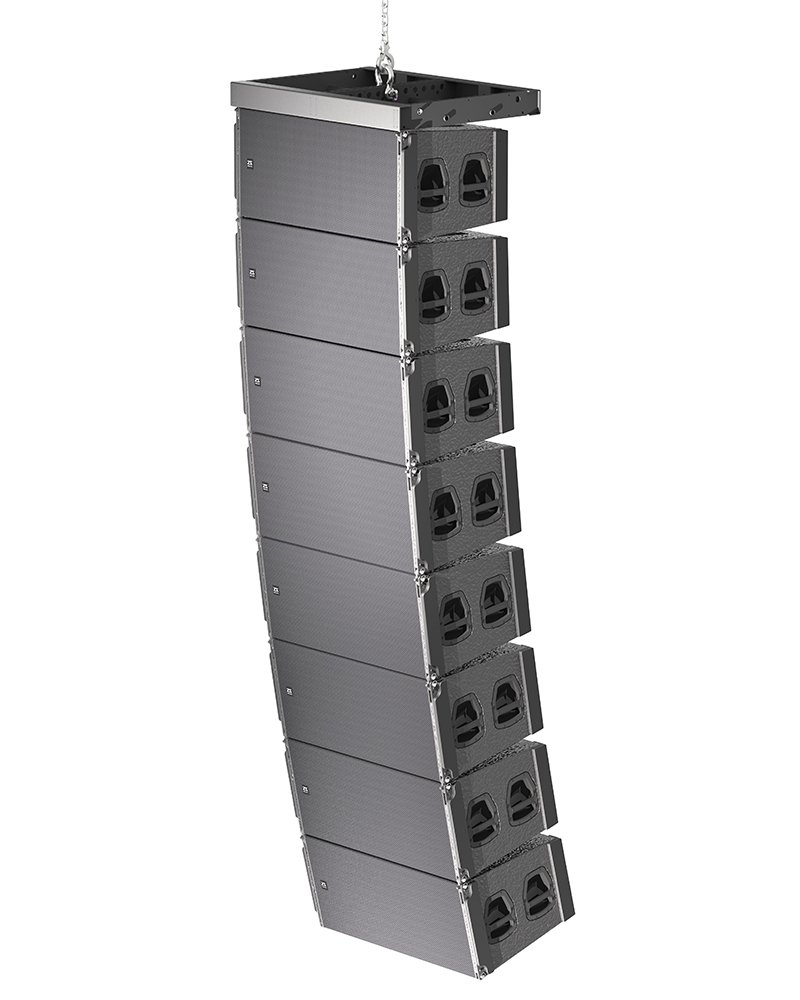
This vertical control is essential. It allows sound engineers to “steer” the audio over the heads of the front row and project it into the distance. This is why we use rigging (the heavy-duty metal frames and pins used to hang and angle the speakers) to create that famous “J-curve.” This curve ensures that the top speakers shoot straight to the back of the venue while the bottom speakers are angled down to cover the people standing right in front of the stage.
Why Touring Pros Love Line Arrays: Long-Distance Reach
For rental companies and touring acts, a Professional Line Array System is a game-changer because of its efficiency. In a traditional setup, the sound volume drops by half every time you double the distance. With a properly tuned line array, that drop-off is much less severe.
For instance, our LA210 series is a dual 10-inch system designed for medium-sized venues. It utilizes a Tri-amp line array system (a configuration where three separate amplifier channels drive the low, mid, and high-frequency sections independently) to ensure that every instrument in the mix has its own space to breathe. This level of detail is what separates a “loud” event from a “professional” one.
Beyond just volume, these systems are built to survive the road. ZSOUND cabinets are often finished with black polyurea paintings (a rugged, waterproof, and scratch-resistant coating that acts like an armor for the wood). While sound is the priority, we know that your gear needs to look as good as it sounds. For organizers who want to create a complete sensory experience, we often recommend pairing our audio setups with reliable stage lighting setups to ensure the visual impact matches the sonic power.
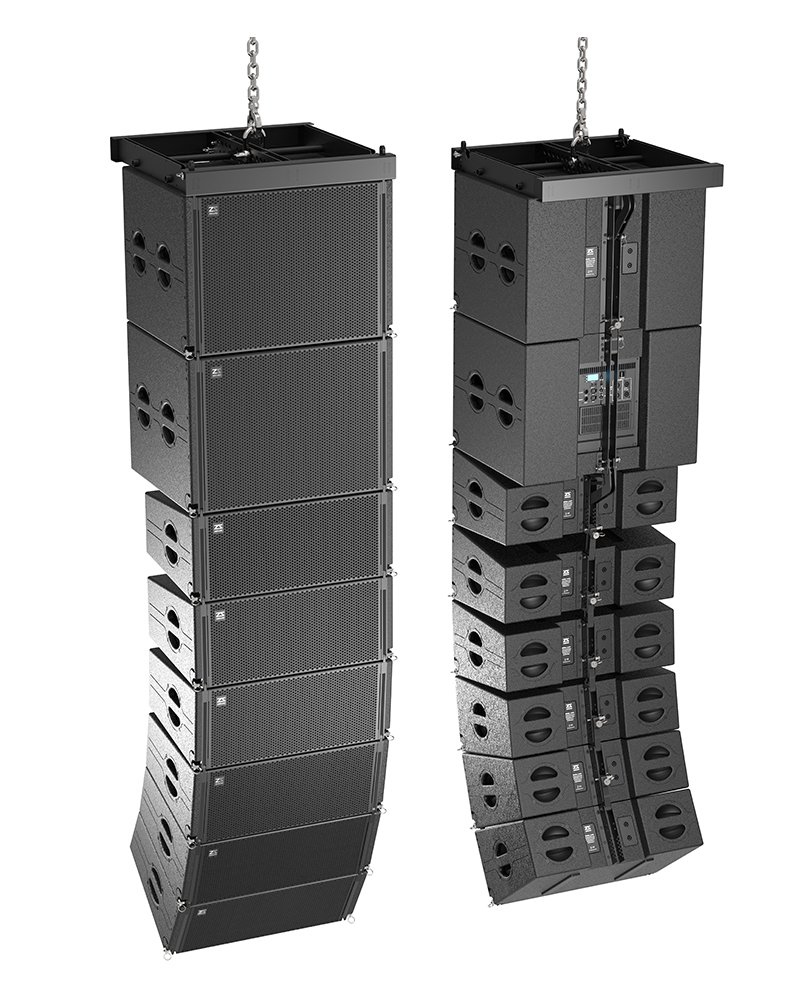
Beyond the Speakers: Professional Sound Systems
A Professional Line Array System is never just about the hanging speakers. To truly move an audience—literally—you need a solid foundation of low-end energy. This is where the synergy between full-range tops and subwoofers (large speakers dedicated to reproducing the deep, “thumping” bass notes) comes into play.
For a system like the LA110, we recommend the LA110S subwoofer. This pairing creates a balanced frequency response (the ability of the system to play everything from the highest violin note to the lowest bass guitar kick equally well). To manage all these components, we use a Processor (a digital “brain” that balances the signals, protects the speakers from blowing out, and ensures the timing is perfect between all parts of the system).
When you invest in a Professional Line Array System, you aren’t just buying boxes; you are buying the ability to control an environment. From the lightweight Baltic birch plywood (high-grade wood used for cabinets because it doesn’t vibrate or “color” the sound) to the precision-engineered waveguides, every detail is focused on one goal: making sure the message—whether it’s a speech, a song, or a sermon—is heard loud and clear.
Common Questions About Line Arrays
Q: Can I use a line array in a small church? A: Absolutely. Compact systems like the LC8 are perfect for smaller spaces where you want the “clean look” of a hanging system without overwhelming the room with volume.
Q: Do I always need to hang the speakers? A: No. Many of our systems support “ground stacking” (placing the line array modules directly on top of the subwoofers using a specialized frame), which is great for venues with low ceilings.
Q: What is the difference between active and passive systems? A: An Active system (like our P-III series) has the amplifiers built directly into the speaker box, making it “plug and play.” A Passive system requires separate external power amplifiers and extra cabling but offers more control for large-scale installations.
Ready to elevate your audio experience? Explore our full range of professional solutions and find the perfect fit for your venue today!