

The Ultimate Guide to Powered Subwoofer Line Array: Maximizing Performance in Mid-Sized Venues
In our extensive work at ZSOUND, we’ve consistently seen how a powered subwoofer line array can transform audio delivery in challenging acoustic environments like conference halls or theaters. For pro audio engineers, the goal is always clear: high SPL, manageable weight, and phase coherence. By integrating the LC10 with the LC18P, you’re not just buying speakers; you’re deploying a precision-engineered sound reinforcement solution.
Technical Deep Dive: LC10 & LC18P Specifications
The heart of this powered subwoofer line array lies in its driver technology. The LC10 handles mids and highs with a high-excursion 10-inch woofer (featuring a 75mm voice coil) and a 3-inch compression driver. It maintains a flat frequency response from 80 Hz to 18 kHz at ±3 dB.
When you pair it with the LC18P’s 18-inch subwoofer (100mm voice coil), the system’s low-end extension drops to 40 Hz, pushing a massive 136 dB peak SPL. This combination ensures that even the back row of a 500-seat theater feels the “punch” of the kick drum without sacrificing the clarity of the vocals.
Pro-Level Setup: Ground Stacking and Rigging
Achieving a professional-grade powered subwoofer line array setup starts with physical placement.
- Step 1: Base Stability. Position the LC18P on a level surface. Its heavy-duty built-in wheels make load-in effortless, but ensure the brakes are engaged before stacking.
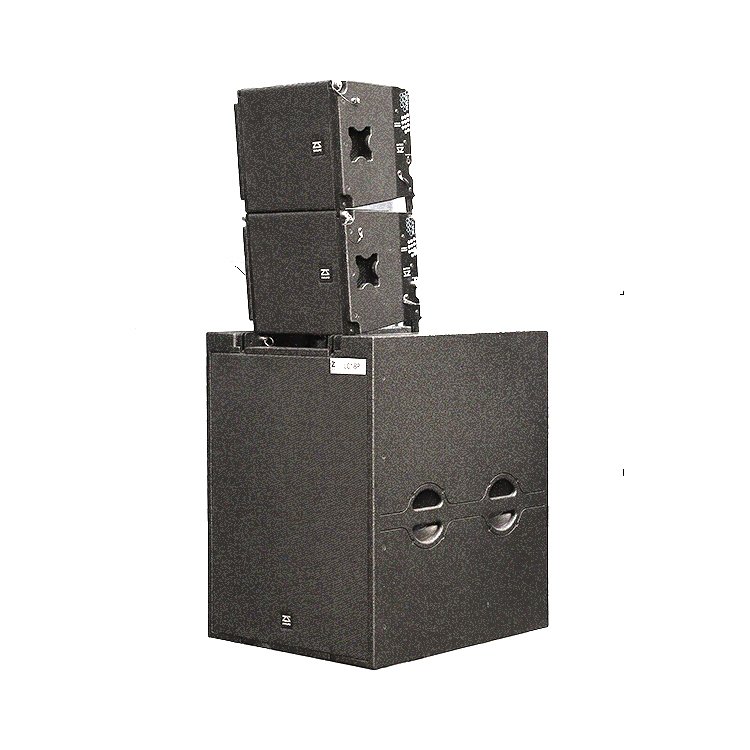
- Step 2: Component Alignment. The LC18P’s top platform is designed to secure two LC10 cabinets without additional rigging hardware. Align the rigging points carefully and insert the safety pins to lock the ground stack.
- Step 3: Angle Optimization. In a typical 200-seat hall, we recommend a 5-degree downward tilt for the top LC10. Since the horizontal dispersion is 100 degrees, this reduces unwanted wall reflections and evens out the sound pressure level (SPL) across the audience.
Advanced Wiring and DSP Configuration
For a powered subwoofer line array, wiring is where many beginners fail. Follow this professional scheme:
- Signal Input: Connect the full-range signal from your mixer to the LC18P’s IN A via high-quality XLR cables.
- Power Distribution: Link the bass signal to IN B. Use the FULL RANGE OUTPUT (NL4) to run a 4-core speaker cable to the first LC10.
- NL4 Pinout: Ensure your wiring follows 1+/1- for LF and 2+/2- for HF. Use a jumper cable to daisy-chain the second LC10 via the LINK port.
- DSP Tuning: The LC18P’s internal Class D amplifier features a DSP that crosses over at 80 Hz. This aligns the phases between the sub and the tops perfectly. Use the USB port to monitor real-time performance and tweak the EQ—if the room has a boomy resonance, try a 2 dB cut at 50 Hz.
Durability and Touring Reliability
We have tested this powered subwoofer line array in high-humidity outdoor festivals and dusty multi-function halls. The Baltic birch enclosures, finished with a rugged polyurea coating, are designed to resist scratches and environmental wear. The neodymium drivers are a game-changer, keeping the LC10’s weight down to a mere 13 kg, which significantly reduces the strain on your rigging team.
Troubleshooting and Maintenance Tips
To keep your powered subwoofer line array in peak condition, always:
- Monitor Impedance: Use a multimeter to check cable integrity before every show.
- Watch the Clip Lights: If the LC18P’s display shows consistent clipping, reduce the input gain immediately to prevent driver fatigue.
- Firmware Updates: Regularly check for ZSOUND DSP presets to optimize the crossover slopes for different venue types.
Conclusion
A powered subwoofer line array like the LC10/LC18P combo delivers the perfect mix of power and simplicity. Whether it’s a wedding, a corporate event, or a live concert, this system ensures professional results every time.
Reach out to our technical team at zsoundpro.com for customized presets or a live demo.
Leave a Reply