
Proven Line Array System for Events Powers Korea’s 30th Senior Citizens’ Day
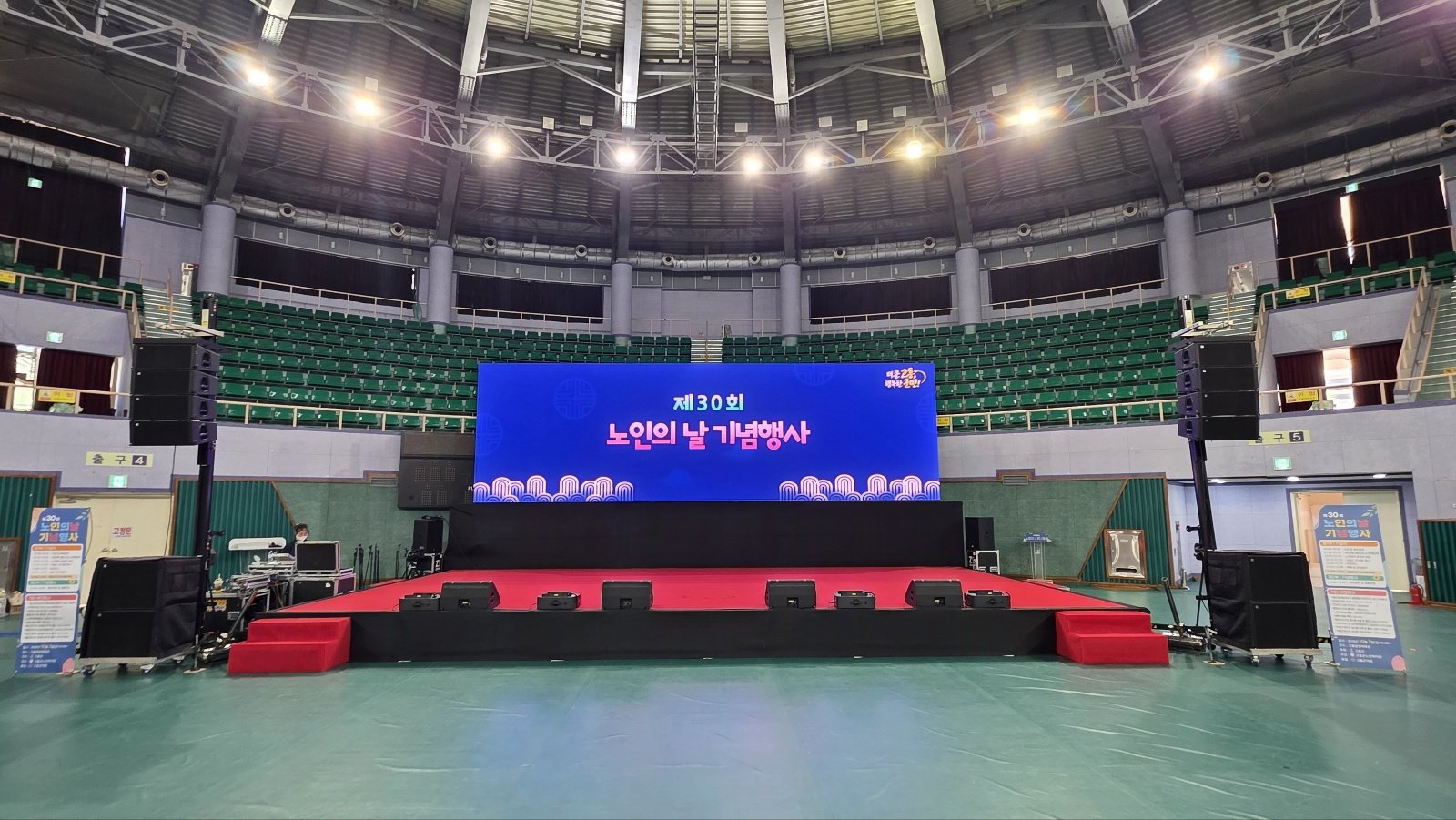
Table of Contents
Overview: A Milestone Celebration in Goheung-gun
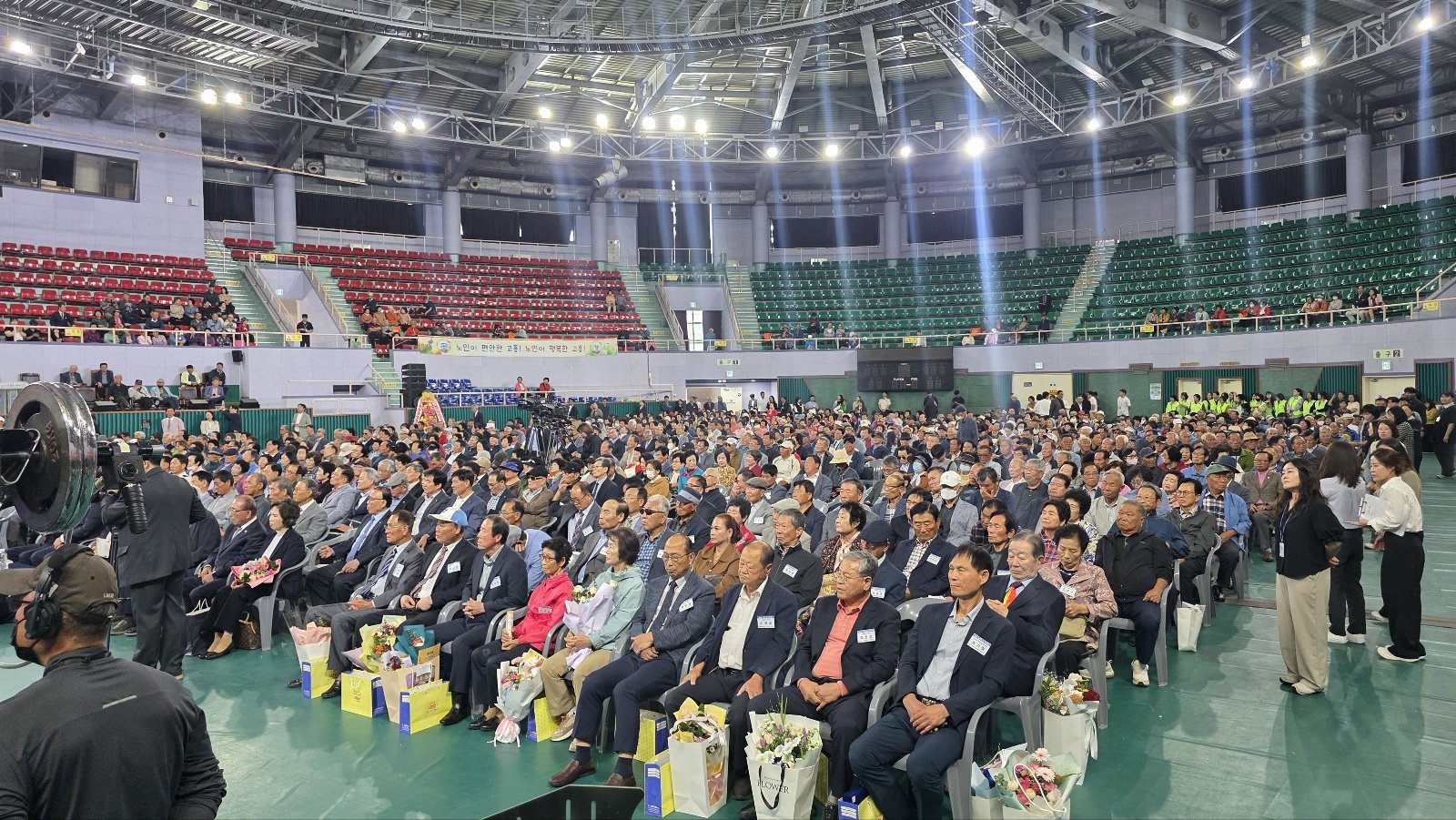
On October 2, 2025, Goheung-gun in South Jeolla Province, South Korea, hosted the 30th Senior Citizens’ Day commemorative event (제30회 노인의 날 기념행사) in the county’s grand civic hall. The program combined a formal ceremony — including a congratulatory address by the Goheung-gun county governor — with celebratory performances for the community’s senior residents, many of whom had traveled from across the county to attend.
A milestone anniversary like the 30th carries weight. For the organizing committee, every detail had to be right: seating, program flow, visibility, and above all the sound. In a room filled with several hundred senior guests, the audio brief was simple and unforgiving: every word of the ceremony had to be intelligible, and every performance had to feel warm and clear — from the front row to the back rows of the tiered seating.
The answer was a ZSOUND line array system for events at the core of the production, supported by CP15M stage monitors and HD15 point-source speakers. This case study looks at how the system was configured, why it worked in a challenging indoor venue, and why the same approach is a reliable blueprint for civic events worldwide.
The Challenge: Speech Clarity in a Large Civic Hall
Civic events are among the most demanding applications for sound reinforcement. Three factors combine to make them hard:
- Speech dominates the program. Commemorative addresses, award presentations, and introductions carry the meaning of the event. If the words are not intelligible, the event fails regardless of how good the music sounds.
- The audience is diverse. Senior listeners typically have reduced hearing sensitivity in the high frequencies — exactly the range where consonants live. The system must deliver those frequencies cleanly, not softly.
- The room is acoustically hostile. The Goheung civic hall has hard floors, metal roof trusses, reflective walls, and high ceilings. Without careful dispersion control, speech energy bounces around the room and arrives as a blurred, echoing version of itself.
These are the exact conditions under which conventional point-source PA fails and line arrays win. A line array’s controlled vertical dispersion aims the sound at the audience and away from the ceiling and rear wall, dramatically reducing the amount of reflected energy that competes with the direct signal. That physical difference — not just higher output — is what makes the line array system for events the right tool for rooms like this.
The Solution: Line Array System for Events with CP15M and HD15
The production team deployed a ZSOUND line array system for events configured for the room. At the heart of the rig sat the LA210N dual 10-inch line array, chosen for its combination of vocal intelligibility, output headroom, and practical logistics. Around it, CP15M wedge monitors kept presenters and performers comfortable on stage, while HD15 point-source enclosures handled front-fill and near-stage coverage where the flown arrays could not reach evenly.
LA210N: The Neodymium Dual 10-Inch Line Array
The LA210N is the neodymium version of the LA210 dual 10-inch line array, sharing the same dual 10-inch format and 3-inch HF driver platform as the LA210. Each cabinet pairs two 10-inch low-frequency drivers with a single 3-inch compression driver, configured for a 100°(H)×10°(V) dispersion window. The design delivers up to 131 dB peak on the LF section and 139 dB peak on the HF section, with a frequency response of 45 Hz–16 kHz (±3 dB).
For a civic hall like Goheung’s, the key engineering benefit is the array’s controlled vertical coverage. The 10° vertical window lets the engineer aim energy at the audience and away from the reflective ceiling and walls — precisely what keeps speech intelligible in a reverberant room. The 100° horizontal coverage means a compact array can fill a wide stage area without dead zones at the edges.
Equally important for a one-day civic production: the neodymium magnet structure keeps the cabinet light at 35 kg, measuring just 303.4×730×464.5 mm. A small crew can rig a full system in hours, and the cabinets travel well in standard truck packs — a genuine advantage when the production team is working against a tight schedule.
| LA210N (neodymium version of LA210) — key specifications | |
| Frequency response | 45 Hz–16 kHz (±3 dB) / 40 Hz–18 kHz (-10 dB) |
| Coverage angle (-6 dB) | 100° (H) × 10° (V) adj. |
| Sensitivity (@1W/1m) | HF 113 dB / LF 97 dB |
| Rated power (AES) | HF 120 W / LF 800 W |
| Nominal impedance | HF 16 Ω / LF 16 Ω |
| Max SPL | HF 139 dB / LF 131 dB peak |
| Transducers | LF 2×10″ (75 mm), HF 1×3″ compression |
| Dimensions (H×W×D) | 303.4×730×464.5 mm |
| Weight | 35 kg |
CP15M: High-SPL Stage Monitors
On stage, the CP15M monitors gave presenters and performers a clear, low-profile reference. The CP15M is a 15-inch neodymium wedge monitor with a 3-inch compression driver, rated at 140 dB peak output. That is loud enough for performers to hear themselves even when the main system is driven at high levels, and the cabinet is compact enough (350×600×514 mm, 22 kg) to keep the stage picture clean for cameras and guests.
For a ceremony with multiple presenters and performers, reliable monitoring means no one has to strain to hear — which keeps the program flowing and the stage calm. The CP15M’s 60°(H)×40°(V) pattern is well suited to on-stage placement without excessive bleed into the audience area.
| CP15M stage monitor — key specifications | |
| Frequency response | 70 Hz–16 kHz (±3 dB) / 50 Hz–18 kHz (-10 dB) |
| Coverage angle (-6 dB) | 60° (H) × 40° (V) |
| Sensitivity (@1W/1m) | 98 dB |
| Rated power (AES) | 500 W |
| Nominal impedance | 8 Ω |
| Max SPL | 140 dB peak |
| Transducers | LF 1×15″ (75 mm) neodymium, HF 1×3″ compression |
| Dimensions (H×W×D) | 350×600×514 mm |
| Weight | 22 kg |
[图3 alt=”CP15M stage monitor on stage with the line array system for events”]
HD15: Point Source Support Coverage
A flown line array can struggle to cover the first rows in front of the stage evenly, so the system included HD15 point-source enclosures for front-fill and near-field support. The HD15 is a 15-inch point-source speaker with a 1.5-inch compression driver, delivering 100 dB sensitivity and up to 133 dB peak output. Its 70°(H)×100°(V) pattern suits close-quarters coverage, and its 27 kg weight and compact footprint make positioning simple.
The HD15’s role in this system was focused: blend the near field into the arrays so the front rows experienced the same clarity as the middle of the hall. In practice, this meant the first two or three rows of seats — the guests closest to the stage — heard consistent, uncolored sound rather than the harsh, over-loud tonality that often plagues near-field positions.
| HD15 point source speaker — key specifications | |
| Frequency response | 80 Hz–16 kHz (±3 dB) / 50 Hz–18 kHz (-10 dB) |
| Coverage angle (-6 dB) | 70° (H) × 100° (V) |
| Sensitivity (@1W/1m) | 100 dB |
| Rated power (AES) | 500 W |
| Nominal impedance | 8 Ω |
| Max SPL | 127/133 dB peak |
| Transducers | LF 1×15″ (75 mm), HF 1×1.5″ compression |
| Dimensions (H×W×D) | 680×425×454 mm |
| Weight | 27 kg |
System Configuration
The final configuration mirrored what most civic installations need:
- Main PA: LA210N dual 10-inch line arrays, flown or stacked per side, covering the full audience depth with a 100° horizontal window.
- Stage monitors: CP15M wedge monitors positioned for presenters and performers.
- Support / front fill: HD15 point-source speakers for front-row and near-stage coverage.
- Subwoofers: The system was paired with dedicated low-frequency cabinets as configured for the event, anchoring the musical sections of the program.
- Processing: The system was tuned on site — delay, EQ, and limiters optimized for the room’s acoustics — following the same workflow ZSOUND engineers apply to concert and touring installations worldwide.
This is a deliberately economical rig: a compact line array at the core, monitors on stage, and point-source fills where needed. It is the kind of configuration that scales cleanly — the same line array system for events can grow from a 300-seat civic hall to a multi-thousand-capacity outdoor festival simply by adding cabinets and subwoofers.
Results: Consistent Coverage and Crisp Speech
From the first congratulatory address to the closing performance, the line array system for events delivered what the brief demanded: intelligible speech and consistent coverage.
- Every word was clear. Even at the back of the hall, guests heard the ceremony with minimal smearing, thanks to the arrays’ controlled 10° vertical dispersion and the absence of a heavy reflected field.
- Performers were comfortable. The CP15M wedges held stable at high SPL without feedback, so presenters could focus on their words rather than on hearing themselves.
- No holes in the near field. The front rows received even sound from the HD15 fills, with no obvious dead zone in front of the stage.
- A fast, clean setup. The 35 kg LA210N cabinets and compact monitors reduced both rigging time and truck space — a real advantage for a one-day civic production.
For the organizing committee, the outcome was simple: a dignified ceremony, clearly heard by every guest. For the production team, the event was another confirmation that a well-matched system — array, monitors, and fills designed as one family — removes the uncertainty that makes sound reinforcement stressful.
[图4 alt=”Audience seated at the Senior Citizens’ Day event reinforced by the line array system for events”]
Why a Line Array System for Events Suits Civic Events
The Goheung event is a good example of why a dual 10-inch line array has become the default recommendation for civic halls, community centers, and municipal events:
- Speech-first design: The HF section and the 10° vertical window are engineered for vocal clarity in reverberant rooms — the number-one requirement of any civic program.
- Coverage without dead zones: 100° horizontal dispersion covers wide stage areas with fewer cabinets, reducing cost and rigging complexity.
- Practical logistics: At 35 kg per cabinet, a small crew can rig a full system in hours — critical for one-day municipal productions.
- Scalability: The same line array system for events scales from a 300-seat civic hall to large festival stages by adding cabinets and subwoofers.
- A proven companion ecosystem: ZSOUND subwoofers, monitors, and point-source speakers are engineered as one family, so combining main arrays, fills, and monitors is seamless rather than improvised.
For integrators and production companies, the practical takeaway is equally important: a system built from one manufacturer’s family behaves predictably, tunes faster, and needs less troubleshooting than a patchwork of brands.
Frequently Asked Questions
What is a line array system for events? The line array system for events is ZSOUND’s dual 10-inch line array family, built around two 10-inch LF drivers and a 3-inch HF compression driver per cabinet, with 100° horizontal and 10° vertical coverage. It is designed for speech-critical applications such as civic events, houses of worship, and mid-size concerts.
How many people can a dual 10-inch line array cover? A single LA210N system, flown as left/right arrays of 8–12 cabinets, comfortably covers audiences of several hundred to a few thousand, depending on venue geometry and SPL requirements. For smaller civic halls, even 4–6 cabinets per side deliver consistent coverage.
What subwoofers pair with the LA210 series? ZSOUND’s LA18S — and its powered variant, the LA18SP-III — is the officially matched subwoofer for the LA210 series, delivering the low-end punch needed for musical performances.
Can the line array system for events be used outdoors? Yes. The system is widely used for outdoor events; for outdoor deployments, additional cabinets and subwoofers extend coverage and low-frequency output.
Is the LA210N an active or passive system? The LA210 series supports both passive and powered configurations; consult your ZSOUND representative for the exact drive configuration and compatible amplifiers for your venue.
How long does it take to set up a line array system for events for a civic event? With the 35 kg cabinet weight and standard flying hardware, a small crew can rig, align, and tune a typical civic-hall system within a few hours — including on-site EQ and delay optimization.
[图5 alt=”Stage view of the line array system for events at the 30th Senior Citizens’ Day event in Goheung-gun”]
Conclusion
The 30th Senior Citizens’ Day commemorative event in Goheung-gun showed exactly what a well-matched sound system can do for a community celebration. The line array system for events delivered clear, even, effortless audio for both ceremony and performance, supported by CP15M monitors and HD15 fills. No feedback incidents, no coverage gaps, no strained listening — just a program that everyone could hear and understand.
For organizers of civic events — from municipal ceremonies to festivals — the line array system for events offers a proven, scalable path to sound that every guest can follow. For sound engineers, it is a reminder that the right tool for a speech-critical room is not raw power, but controlled coverage.
Contact your ZSOUND distributor to configure a line array system for events. [内链:/products/line-array/la210/ | /products/stage-monitor/cp15m/ | /products/point-source/hd15/ | /case-studies/] [外链:韩国第30届老人节背景资料(待替换为实际 URL)]