
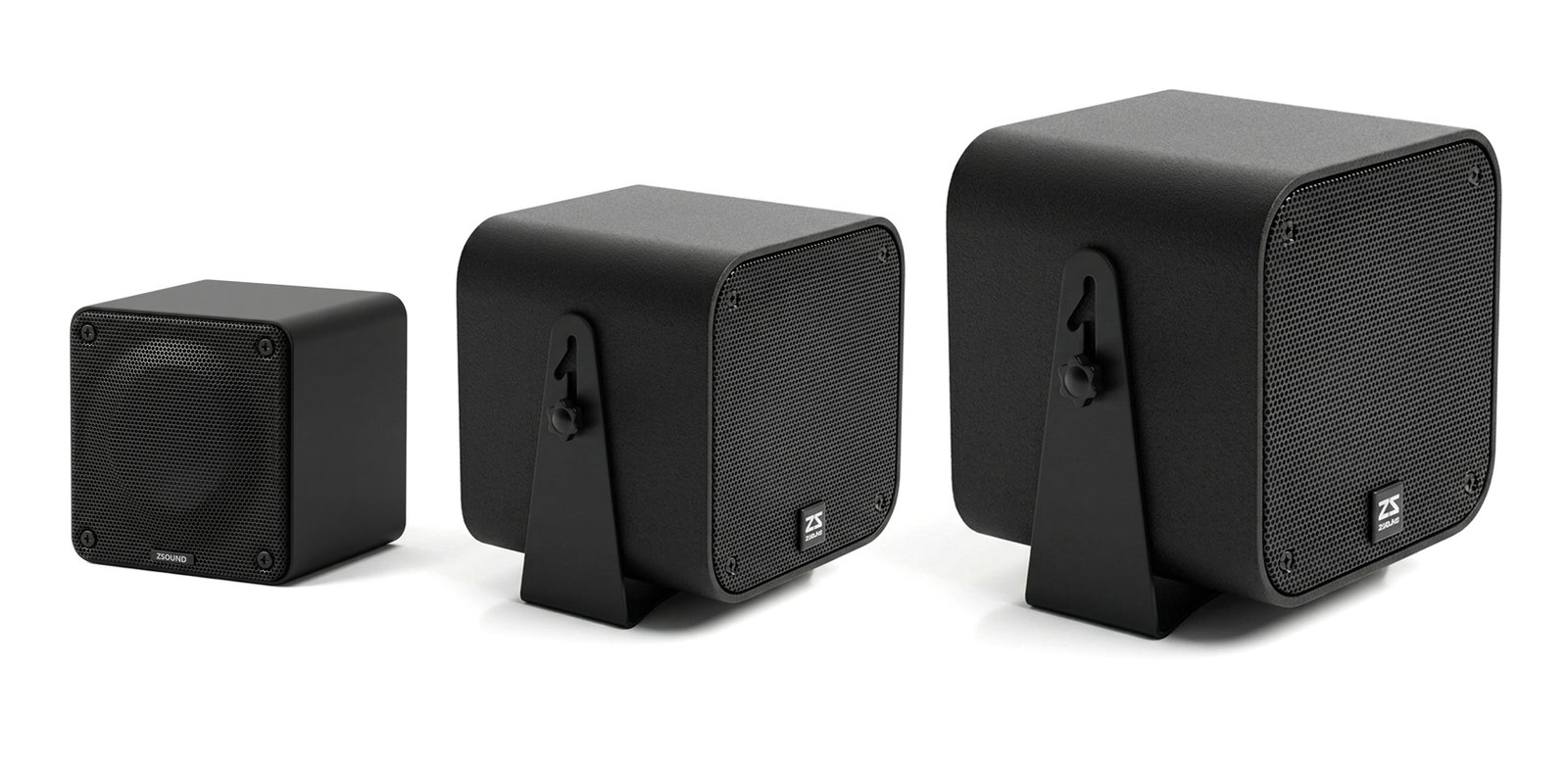
G Series Commercial Speakers
Technical Specification
| Parameter Name | Parameter Value |
|---|---|
| Frequency Response | 130 Hz-18 kHz (±3 dB), 100 Hz-20 kHz (-10 dB) |
| Nominal Coverage (-6 dB) | 70°(H), 70°(V) Constant directivity |
| SENSITIVITY (@1w/1m) | 92 dB SPL |
| POWER RATING (AES) | 50W |
| NOMINAL IMPEDANCE | 8 ohm |
| MAXIMUM SPL | 109 dB SPL, 115 dB SPL peak |
| DRIVERS | 1×4.5″ Full range driver |
Physical Data
| Parameter Name | Parameter Value |
|---|---|
| DIMENSIONS (HxWxD) | 130 x 130 x 139 mm |
| WEIGHT | 2.5 kg |
| CONNECTORS | 2 pin WP plug |
| MATERIALS | 3mm Aluminum |
| GRILLE | White, black water paint |
| DIAGRAMS | Phase response, Magnitude, Impedance graphs provided. Front, Top, Side views provided. |
Technical Specification
| Parameter Name | Parameter Value |
|---|---|
| FREQUENCY RESPONSE | 120 Hz-20 kHz (±3 dB), 100 Hz-20 kHz (±6 dB) |
| NOMINAL COVERAGE (-6 dB) | 80°(H), 80°(V) Constant directivity |
| SENSITIVITY (±1w/1m) | 94 dB SPL |
| POWER RATING (AES) | 130W (AES) |
| NOMINAL IMPEDANCE | 8 ohm |
| MAXIMUM SPL | 115 dB / 121 dB SPL peak |
| DRIVERS | 1×6″ Full range driver (38mm voice coil) |
Physical Data
| Parameter Name | Parameter Value |
|---|---|
| DIMENSIONS (HxWxD) | 201 x 201 x 183 mm |
| WEIGHT | 3.5 kg |
| CONNECTORS | Terminal |
| SPEAKER CABLES | red +, black – |
| MATERIALS | 9mm, 12mm multi-plywood |
| FINISH | Black polyurea paintings |
| GRILLE | Black epoxy mesh grille with acoustically reticulated foam |
| RIGGING | Lifting point |
Technical Specification
| Parameter Name | Parameter Value |
|---|---|
| FREQUENCY RESPONSE | 100 Hz ~ 20 kHz (±3 dB)80 Hz ~ 20 kHz (-10 dB) |
| NOMINAL COVERAGE (-6dB) | 80°(H), 80°(V) Constant directivity |
| SENSITIVITY (±1w/1m) | 94 dB SPL |
| POWER RATING (AES) | 150W |
| NOMINAL IMPEDANCE | 8 ohm |
| MAXIMUM SPL | 115 dB / 121 dB SPL peak |
| DRIVERS | 1×8″ Full range driver (50mm voice coil) |
Physical Data
| Parameter Name | Parameter Value |
|---|---|
| Dimensions (HxWxD) | 234 x 234 x 183 mm |
| WEIGHT | 9.8 kg |
| CONNECTORS | Terminal |
| SPEAKER CABLES | red+, black- |
| MATERIALS | 9mm, 12mm multi-plywood |
| FINISH | Black polyurea paintings |
| GRILLE | Black epoxy mesh grille with acoustically reticulated foam |
| RIGGING | Lifting point |
| DIAGRAMS | Frequency response, Impedance graphs; Front, Top, Side views provided |
Commercial Speakers Done Right: The ZSOUND G Series
Walk into a busy restaurant, a packed classroom, or a meeting room mid-presentation, and you will notice something about the sound — or rather, you won’t. Commercial speakers do their best work when nobody notices them: voices stay clear, background music stays smooth, and the hardware quietly disappears into the architecture. The ZSOUND G Series was designed around exactly that philosophy. Three compact passive loudspeakers — the G4, G6, and G8 — share one voicing family, one installation logic, and one goal: full, even sound from enclosures small enough to mount almost anywhere.
Each model is a full range design, meaning a single driver reproduces both the high and mid-low frequencies on its own. There is no crossover splitting the signal between a woofer and a tweeter, so there is no crossover point where phase smearing can blur speech consonants — the “s” and “t” sounds that decide whether an announcement is understood or merely heard. For venues that run audio ten or twelve hours a day, that simplicity translates directly into reliability and clarity.
Why Full Range Drivers Excel at Speech and Background Music
Most commercial audio failures are not volume failures — they are intelligibility failures. A two-way box with a poorly integrated crossover can sound impressive on a demo track yet leave listeners straining to catch a presenter’s words from the back row. The G Series attacks this problem at the source.
Because one driver handles the entire vocal band, the voice comes from a single acoustic point. The ear locks onto it instantly, the way it locks onto a person speaking across a table. Dispersion is constant directivity — the speaker spreads sound evenly across its whole rated coverage angle instead of firing a narrow “hot beam” straight ahead. The G4 covers 70° × 70° (-6 dB), while the G6 and G8 open up to 80° × 80°, wide enough that a handful of cabinets can bathe an entire dining floor or lecture hall in uniform sound with no loud seats and no dead zones.
The frequency figures tell the same story. All three models hold a tolerance of ±3 dB across their working bands — a tighter window than many cost-focused rivals manage — and sensitivity sits at 92–94 dB (1W/1m), so ordinary commercial amplifiers drive them without strain. The G6’s 38 mm neodymium full range driver (a lightweight magnet structure that produces more magnetic force per gram, letting the cone start and stop faster) keeps transients crisp at just 3.5 kg. Step up to the G8 and its 50 mm voice coil pushes usable response down to 80 Hz (-10 dB) — deep enough that many music-focused venues can skip a subwoofer entirely.
G4 vs G6 vs G8: Which Fits Your Venue?
Choosing within the series is a matter of matching driver size and output to the room, because voicing stays consistent from model to model. Here is the practical read:
- G4 — the invisible one. At 130 × 130 × 139 mm and 2.5 kg, its 3 mm aluminum enclosure tucks into joinery, shelving, and tight ceiling corners. It handles 50 W (AES, the conservative continuous power standard used in professional audio) and peaks at 115 dB SPL. The 2-pin WP plug locks positively and resists vibration — a small detail that prevents crackling connections years into a project. Available in black or white water-based finishes for exposed architectural positions.
- G6 — the all-rounder. A 6-inch driver in a plywood cabinet that still weighs only 3.5 kg. Sensitivity rises to 94 dB, power handling to 130 W (AES), and maximum SPL to 121 dB peak. For most meeting rooms and classrooms up to mid-size, this is the default answer.
- G8 — the full-bodied one. The 8-inch driver with its 50 mm voice coil carries 150 W (AES) and reaches 80 Hz, giving music programs genuine warmth without assistance. At 9.8 kg with a dedicated lifting point, it mounts solo on any competent bracket.
| Specification | G4 | G6 | G8 |
|---|---|---|---|
| Driver | 4.5″ full range | 6″ full range (38 mm neodymium VC) | 8″ full range (50 mm VC) |
| Frequency Response (±3 dB) | 130 Hz – 18 kHz | 120 Hz – 20 kHz | 100 Hz – 20 kHz |
| Power (AES) / Max SPL (peak) | 50 W / 115 dB | 130 W / 121 dB | 150 W / 121 dB |
| Coverage (-6 dB) / Weight | 70° × 70° / 2.5 kg | 80° × 80° / 3.5 kg | 80° × 80° / 9.8 kg |
A mixing strategy works well here: G8s carry the main floor of a restaurant while G4s fill corridors, restrooms, and the patio — same tonal family, so walking between zones never feels like stepping into a different venue.
Where the G Series Works Hardest: Applications
The three models map cleanly onto the spaces commercial integrators specify most:
- Meeting rooms and boardrooms — speech sits in the 200 Hz–8 kHz window, and every G Series model covers it flat. One pair of G6s on the display wall typically replaces a cluttered layout of undersized ceiling boxes, and 8-ohm impedance means standard 70 V-free low-impedance amps or small multi-channel amplifiers drive them directly.
- Classrooms and training centers — constant directivity keeps the back bench as intelligible as the front row, and 121 dB peak headroom (G6/G8) leaves generous margin for video playback and the occasional guest lecture.
- Dining bars, cafés, and retail — the G8’s 80 Hz reach handles dinner-service playlists without a sub; where dance-floor weight is wanted later, the S12P active subwoofer adds a compact 2.1 layer with its own DSP. Even coverage matters commercially here: guests should converse easily at every table, not just the tables far from the speakers.
- Distributed background music (BGM) — the G4’s WP plug and 2.5 kg weight make long multi-cabinet runs fast to install and service, with black or white finishes disappearing into ceilings and bulkheads.
Commercial Speakers vs Consumer Bluetooth Boxes
It is tempting for a venue owner to scatter a few consumer wireless speakers around and call it done. The comparison below shows why integrators steer projects toward purpose-built commercial speakers instead:
| Comparison Point | ZSOUND G Series | Typical Consumer Speaker |
|---|---|---|
| Power rating basis | AES standard (conservative, continuous) | Peak/PMPO marketing figures |
| Coverage | 70°–80° constant directivity, predictable | Unspecified, varies by placement |
| Mounting | Lifting points, WP plug, wall/ceiling hardware | Shelf or tabletop only |
| Wiring for runs | 8 Ω passive, daisy-chainable via terminals | One Bluetooth device per source |
The short version: consumer boxes are designed for a listener two meters away, while the G Series is designed for fifty listeners at ten meters — with the wiring, rigging, and rated power to run all day, every day. A venue’s atmosphere depends on sound as much as on décor; project designers who already specify dedicated visual tools such as custom stage and event lighting treat audio the same way — purpose-built hardware, chosen once and installed correctly.
Installation, Wiring, and System Matching
Every G Series cabinet runs at a nominal 8 ohms, the standard load for commercial power amplifiers, so two cabinets in parallel per channel present a routine 4-ohm load. Wiring is deliberately installer-friendly: the G4 uses its locking 2-pin WP plug, while the G6 and G8 use clearly marked terminals (red + / black −) that speed up long daisy-chained runs and reduce polarity errors. G6 and G8 cabinets are 9/12 mm multi-plywood finished in scuff-resistant black polyurea with an epoxy mesh grille backed by acoustic foam; the G4’s aluminum shell answers sites where a metal enclosure is preferred.
Amplifier matching is straightforward: allow roughly 1.5–2× the AES rating per channel (75–100 W for the G4, around 200 W for the G6, 250–300 W for the G8 into 8 Ω) to keep peaks clean without ever clipping. Add an S12P active subwoofer where program material demands sub-80 Hz weight, and the full system still fits in a single rack space.
Specify the G Series for Your Next Project
Three enclosure sizes, one consistent voice, and hardware details chosen by people who clearly understand daily commercial use — that is the G Series in a sentence. Whether the project is a single café or a campus-wide BGM rollout, contact the ZSOUND team today for datasheets, EASE GLL files, and project pricing, and let these commercial speakers make your next venue sound as considered as it looks.