
Mastering the Roar: The ZSOUND Stadium Sound Reinforcement System
ZSOUND R Series: Why a Self Powered Speaker Is the Smartest Choice for Small FOH and Stage Monitoring
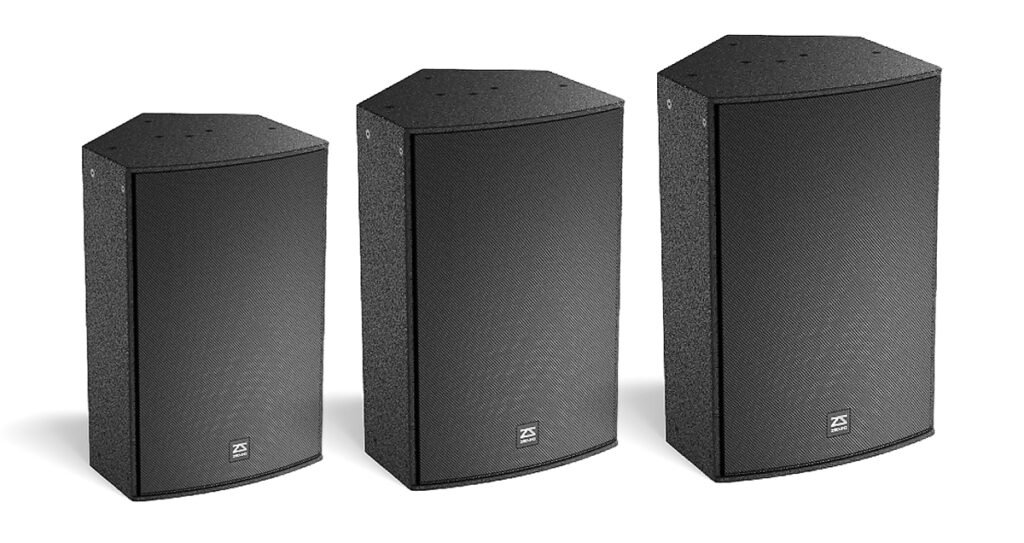
Especificaciones Técnicas
| Parameter Name | Parameter Value |
|---|---|
| FREQUENCY RESPONSE | 55 Hz-18 kHz (±3 dB), 50 Hz-20 kHz (-10 dB) |
| NOMINAL COVERAGE | 80° x 50° |
| MAXIMUM SPL | 118 dB SPL, 124 dB SPL peak |
| CHANNEL GAIN | CH1 (LOW): 28dB, CH2 (HI): 20dB |
| POWER RATING (AES) | 2 * 500W@4Ω + DSP |
| INPUT IMPEDANCE | 18KΩ balanced / 9KΩ unbalanced |
| THD+N (0.1w to 1/2 power) | <0.05% |
| SIGNAL TO NOISE RATIO | >98dB |
| COMMON MODE REJECTION RATIO | >50dB |
| VOLTAGE REQUIREMENT | 200-240VAC 50Hz |
| DRIVERS | LF: 1×10″ woofer (75mm voice coil)HF: 1×1.75″ (1″ throat exit) compression driver (44mm voice coil) |
Physical Data
| Parameter Name | Parameter Value |
|---|---|
| DIMENSIONS (H×W×D) | 566 x 360 x 410 mm / 22.2″ x 14″ x 16″ |
| WEIGHT | 24 kg / 53 lbs |
| RIGGING | M8 top + 36mm bottom |
| MATERIALS | 15mm, 18mm Baltic birch plywood |
| FINISH | Black Polyurea paintings |
| GRILLE | Black epoxy mesh grille with acoustically reticulated cloth |
Especificaciones Técnicas
| Parameter Name | Parameter Value |
|---|---|
| FREQUENCY RESPONSE | 55 Hz-18 kHz (±3 dB), 40 Hz-20 kHz (-10 dB) |
| NOMINAL COVERAGE | 80° x 50° |
| CHANNEL GAIN | CH1 (LOW): 26dB, CH2 (HI): 20dB |
| POWER RATING (AES) | 2 * 500W@4Ω + DSP |
| INPUT IMPEDANCE | 18KΩ balanced / 9KΩ unbalanced |
| THD+N (0.1w to 1/2 power) | <0.05% |
| SIGNAL TO NOISE RATIO | >98dB |
| COMMON MODE REJECTION RATIO | >50dB |
| VOLTAGE REQUIREMENT | 200-240VAC 50Hz |
| MAXIMUM SPL | 122 dB SPL, 128 dB SPL peak |
| DRIVERS | LF: 1×12″ woofer (75mm Voice coil)HF: 1×1.75″ (1″ throat) compression driver (44mm Voice coil) |
Physical Data
| Parameter Name | Parameter Value |
|---|---|
| DIMENSIONS (HxWxD) | 616 x 400 x 410 mm / 24″x16″x16″ |
| WEIGHT | 27 kg / 60 lbs |
| CONNECTORS | Not provided in image |
| SPEAKER CABLES | Not provided in image |
| MATERIALS | 15mm, 18mm Baltic birch plywood |
| FINISH | Black Polyurea paintings |
| GRILLE | Black epoxy mesh grille with acoustically reticulated cloth |
| RIGGING | M8 top + 35mm bottom |
Especificaciones Técnicas
| Parameter Name | Parameter Value |
|---|---|
| FREQUENCY RESPONSE | 50 Hz-18 kHz (±3 dB), 30 Hz-20 kHz (-10dB) |
| NOMINAL COVERAGE | 80° x 50° |
| MAXIMUM SPL | 123 dB SPL, 129 dB SPL peak |
| CHANNEL GAIN | CH1 (LOW): 26dB, CH2 (HI): 20dB |
| POWER RATING (AES) | 2 * 500W@4Ω + DSP |
| INPUT IMPEDANCE | 18kΩ balanced / 9kΩ unbalanced |
| THD+N (0.1w to 1/2 power) | <0.05% |
| SIGNAL TO NOISE RATIO | >98dB |
| COMMON MODE REJECTION RATIO | >50dB |
| VOLTAGE REQUIREMENT | 200-240VAC 50Hz |
| DRIVERS | LF: 1×15″ woofer (75mm Voice coil)HF: 1×3″ (1″ throat) compression driver (75mm Voice coil) |
Physical Data
| Parameter Name | Parameter Value |
|---|---|
| Dimensions (HxWxD) | 686 x 456 x 445 mm / 27″x18″x18″ |
| WEIGHT | 31 kg / 68 lbs |
| RIGGING | M8 top + 35mm bottom |
| MATERIALS | 15mm, 18mm Baltic birch plywood |
| FINISH | Black Polyurea paintings |
| GRILLE | Black epoxy mesh grille with acoustically reticulated cloth |
| DIAGRAMS | Detailed dimension diagrams for front, top, and side views provided in image. |
A self powered speaker — one with the amplifier built directly into the enclosure, eliminating the need for an external amp rack — changes the equation for rental companies, houses of worship and solo performers. The ZSOUND R Series (R10P-III, R12P-III and R15P-III) takes this concept further by adding a DSP processor and a rotatable 80°×50° horn, creating a compact system that deploys in minutes rather than hours.
The Core Advantage: Amplifier and Speaker Matched at the Factory
When you buy a passive speaker, you face a chain of decisions: which amplifier, which processor, which cable, which preset. A self powered speaker removes every one of those variables. The R Series ships with a dual-channel Class D module delivering 2×500 W at 4 Ω, pre-matched to the exact drivers inside.
This is not simply about convenience. Because the amplifier and speaker are engineered together, the DSP (Digital Signal Processor — a small computer that shapes the sound) can apply precise crossover points, limiting and EQ that a generic external amp cannot replicate. The result is a system that sounds consistent from the first box to the hundredth, with no risk of an underpowered amp clipping or an overpowered one damaging the voice coil.
R10P-III vs R12P-III vs R15P-III: A Detailed Comparison
All three models share the same amplifier module and DSP architecture, but scale in woofer size, low-frequency reach and maximum output. The table below breaks down the differences:
| R10P-III | 10″ | 1.75″ (44 mm VC) | 2×500 W @ 4 Ω + DSP |
| R12P-III | 12″ | 1.75″ (44 mm VC) | 2×500 W @ 4 Ω + DSP |
| R15P-III | 15″ | 3″ (75 mm VC) | 2×500 W @ 4 Ω + DSP |
| 124 dB | 55 Hz – 18 kHz | 24 kg | Near-field, small stage (近场监听,小型舞台) |
| 128 dB | 55 Hz – 18 kHz | 27 kg | Small FOH, monitor (小型主扩声,返送) |
| 129 dB | 50 Hz – 18 kHz | 31 kg | Main PA, larger stage (主扩声音箱,大型舞台) |
The R10P-III and R12P-III share the same 1.75-inch high-frequency driver, keeping the upper midrange character identical across the two sizes. The R15P-III steps up to a 3-inch compression driver, adding authority in the 2 kHz–8 kHz region where vocals cut through a dense mix. All three extend low enough for speech and light music without a subwoofer, though the R15P-III reaches 50 Hz for fuller music playback.
The DSP Brain: What It Actually Does for Your Sound
Every self powered speaker in the R Series runs the same DSP program, accessible via USB on the rear panel. The processor handles three critical tasks:
- Crossover management: The 12 dB/octave split between woofer and compression driver is set at the factory, with channel gains of 26 dB (LOW) and 20 dB (HI) pre-configured for balanced output.
- Protection limiting: The DSP monitors voice coil temperature and amplifier clipping, engaging a soft limiter before damage occurs — a feature impossible to implement accurately with an external amp.
- System presets: Different EQ curves for FOH, monitor and fill applications can be loaded without external processing.
With THD+N below 0.05% from 0.1 W to half power and a signal-to-noise ratio exceeding 98 dB, the amplifier stage is transparent enough to reveal subtle details in the source material rather than adding its own coloration.
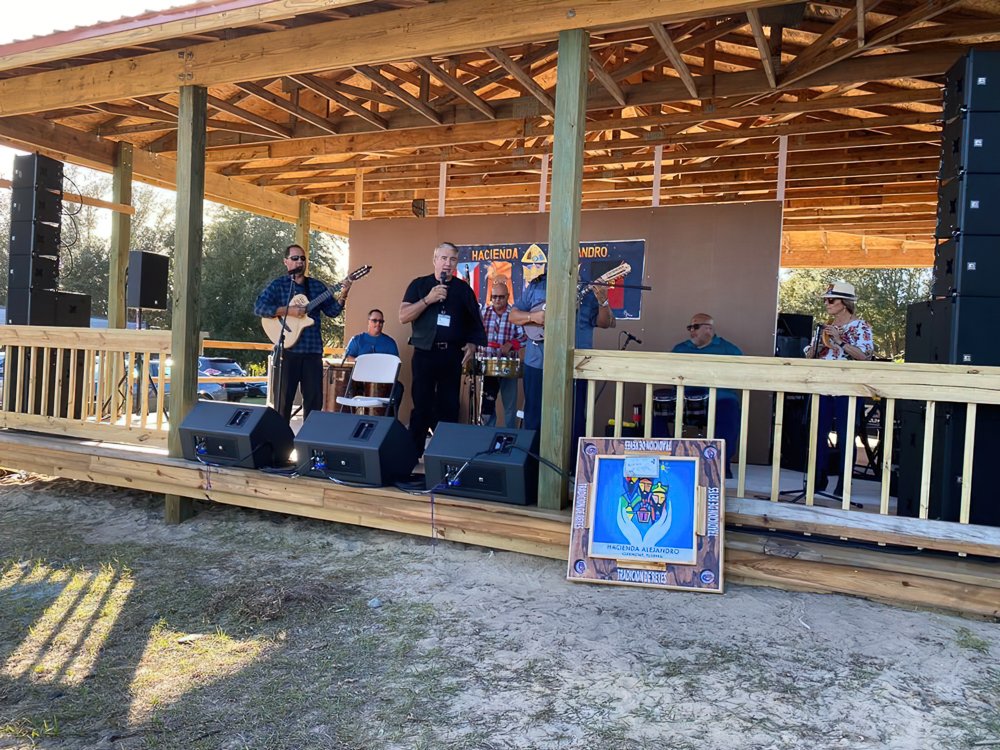
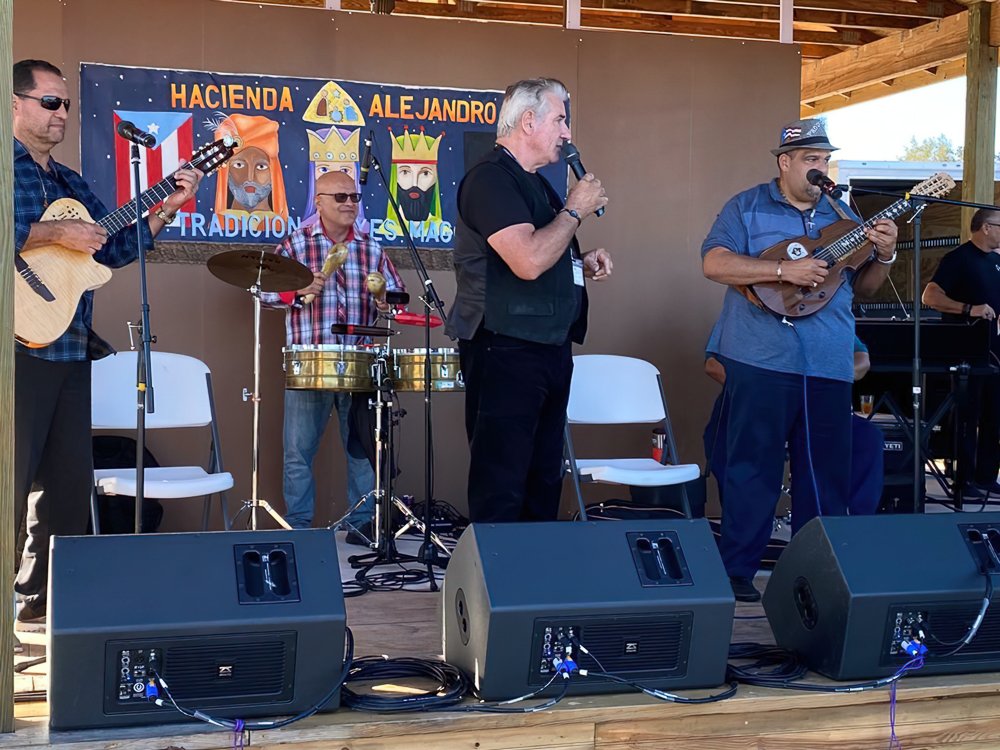
Rotatable Horn: One Speaker, Two Coverage Orientations
The 80°×50° constant directivity horn on every R Series self powered speaker can be physically rotated 90 degrees. In a vertical FOH position, the 80° horizontal spread covers a wide audience while the 50° vertical pattern keeps energy off the ceiling. Flip the cabinet on its side for stage monitoring, rotate the horn, and you maintain the same controlled coverage without high frequencies spraying into nearby microphones.
This is particularly valuable for rental companies that need one inventory to serve both front-of-house and monitor duties. The birch plywood enclosure (15–18 mm) with black polyurea coating survives the daily load-in/load-out cycle, and the M8 top plus 35–36 mm bottom mounting points adapt to pole, tripod or flying configurations.
When to Choose a Self Powered Speaker Over a Passive System
The decision comes down to system size and deployment speed. A passive system makes sense when you already own amplifier racks and need to drive eight or more boxes from a central location. A self powered speaker wins when:
- You need a system running in under 15 minutes
- Each speaker must operate independently (distributed fill, delays)
- The venue has no dedicated amp room or rack space
- Different zones require different EQ or delay settings
The trade-off is weight — the R15P-III at 31 kg is slightly heavier than an equivalent passive 15-inch box — and the need to run mains power to each speaker position. For most small-to-medium deployments, the time saved and the DSP precision outweigh these considerations.
Building a Complete System: Pairing with Subwoofers
For venues that need extended low end, the R Series integrates cleanly with ZSOUND active subwoofers. The S12P, for example, offers a three-channel DSP module that can power two R Series tops in a 2.1 configuration, creating a full-range system without an external amp rack. The PO-SUBP-III provides a larger 18-inch option for permanent installations.
A professional installation is not complete without considering the visual environment. Our partners at SeeStar Lighting offer lighting fixtures that integrate with audio systems for a cohesive venue presentation.
Ready to Deploy Your Next System?
Whether you are a solo musician loading into a coffee house, a church tech director upgrading a 200-seat sanctuary, or a rental house standardizing on one box for FOH and monitor duty, the ZSOUND R Series delivers a self powered speaker that combines factory-matched amplification, DSP precision and installer-friendly flexibility.
Contact the ZSOUND team today for a datasheet, demo unit or project quotation — and hear how much easier your next gig can be.